
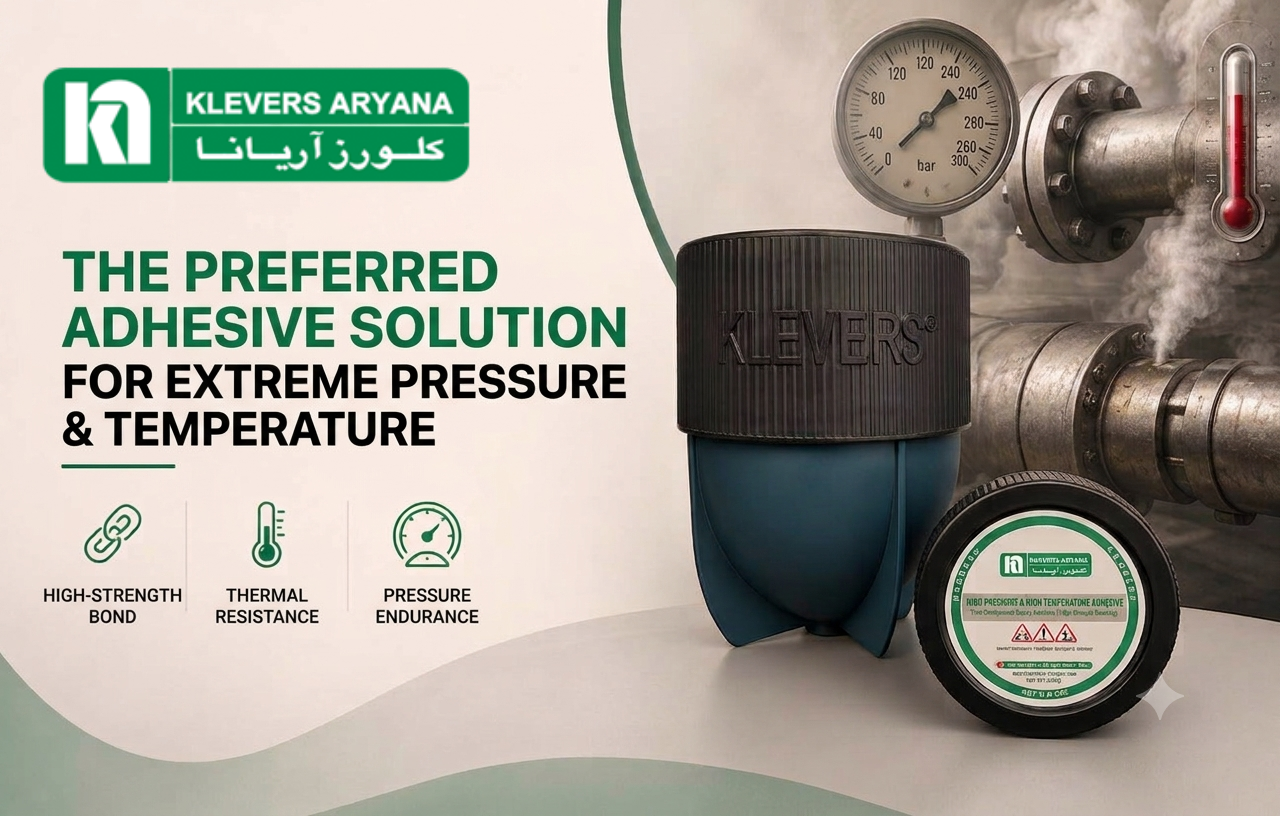

In today’s industrial world, the failure of a joint under high pressure and temperature conditions can lead to a complete production line shutdown, leakage of hazardous materials, and costly repairs. Whether in an oil refinery, a steam plant, or the steel and cement industries, choosing an adhesive capable of withstanding mechanical loads, thermal shocks, and corrosive chemicals is no longer an “option” but a “necessity.” But how is this choice made? This specialized guide provides everything you need to make a technical and safe decision.
If you are looking for a quick summary, we recommend first taking a look at our comprehensive article on Two-Component Adhesive: A Complete Guide to Choosing the Best Industrial and Heat-Resistant Adhesive (2025); however, we will explain the basic criteria for pressure and temperature in detail below.
Why is the Adhesive Selection Guide Extremely Important in These Conditions?
Regular adhesives begin to soften, oxidize, or lose mechanical strength at temperatures above 180 degrees Celsius. Under high operating pressures (up to 300 bar and more), any small defect in the adhesive layer can turn into a leakage path. Therefore, the adhesive selection guide must go beyond just “adhesion strength” and also take into account the thermo-mechanical and chemical perspective.
For example, one of the major challenges in the industry is repairing damaged and leaking flanges. In the article Comparison of Klevers Industrial Paste with Traditional Gaskets | Technical and Economic Analysis for Sealing Connection Flanges, we fully explained why modern adhesive solutions have replaced old gaskets.
The Golden Criteria for Choosing an Adhesive Resistant to High Pressure and Temperature
To ensure the resistance of an industrial joint under harsh conditions, carefully examine these six factors:
| Main Criterion | What does it mean under high pressure and temperature conditions? |
|---|---|
| Continuous Operating Temperature | The adhesive must withstand at least 20% more than the maximum operating temperature. |
| Maximum (Peak) Temperature | The ability to withstand sudden temperature rises (thermal shocks) without cracking or melting. |
| Pressure and Mechanical Strength (Megapascal) | A mechanical strength of at least 10-15 megapascals is required at high temperatures. |
| Chemical Resistance | No corrosion in the presence of steam, acids, solvents, and acidic gases. |
| Consistent Thermal Expansion | A coefficient of expansion similar to the base metal (carbon steel, stainless steel). |
| Pot Life | The possibility of application and shaping before final curing, especially in emergency repairs. |
If you are facing an unexpected shutdown in your plant, we recommend not missing the article Reducing Production Line Downtime Using Fast-Curing Repair Adhesives.
Leading Technologies in Resistant Adhesives (Adhesive Selection Guide by Technology)
In the oil, gas, and petrochemical industries, three main families of sealing and repair materials are used under pressure and temperature:
1. Two-Component Epoxy Adhesives with Engineered Fillers
The cornerstone of industrial repairs. By mixing epoxy resin with ceramic or metallic fillers (such as silicon carbide or stainless steel powder), an adhesive is produced with a compressive strength exceeding 1000 kg/cm² and thermal resistance ranging between 200 and 250 degrees Celsius.
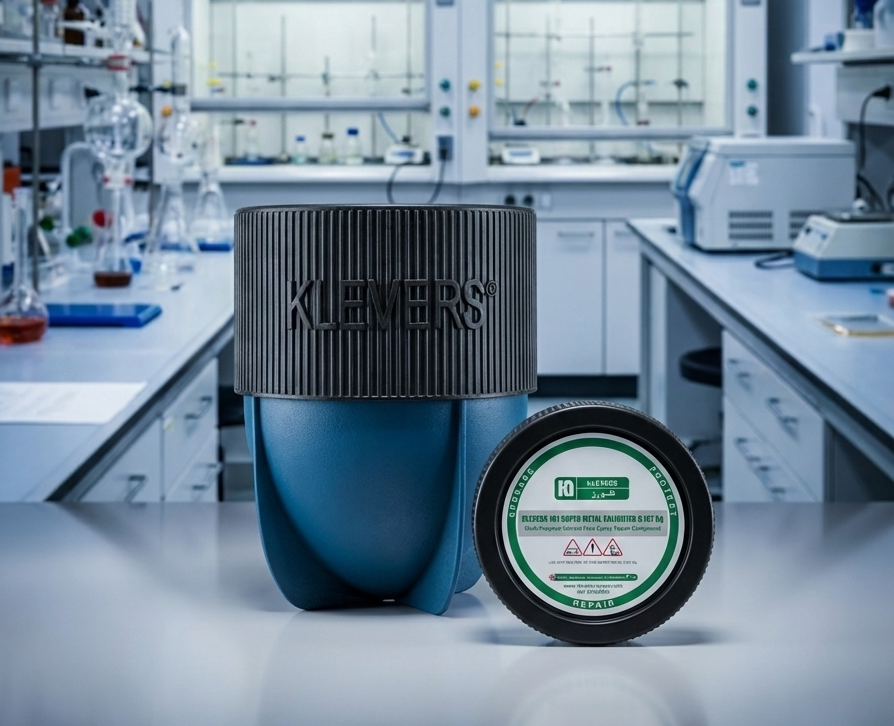
Prominent example: Klevers Paste 101, specifically designed for repairing damaged surfaces and flange joints, and certified according to the API sealing standard.
2. Heat-Resistant Flange Sealing Pastes
For flange surfaces that may need to be opened in the future, flexible pastes based on silicone or graphite compounds are chosen. These pastes have high flexibility against vibration and expansion and withstand temperatures up to 500 degrees Celsius.
3. Adhesives for Corrosion Repair and Surface Wear Resistance
In equipment that is simultaneously exposed to temperature and structural wear (such as pump bodies and pipe elbows), we need a thixotropic adhesive with high wear resistance. The articles Corrosion Repair Adhesive and High-Temperature Resistant Adhesives: Thermo-Mechanical Performance Analysis and Applications in Advanced Industries on our website provide a comprehensive guide for these applications.
Adhesive Selection Guide: 7 Key Steps (Engineering Checklist)
For an error-free selection, review these seven steps in order with your technical team:
- Process Documentation: Record the operating pressure (maximum allowable), continuous and peak temperature, fluid type, and temperature variations.
- Surface Nature: The adhesive must be compatible with carbon steel, stainless steel 316, copper, or concrete.
- Standards: What are the regulatory requirements or conformity certificates for ASTM D1002 (mechanical strength) and API 5A/6A (sealing quality)?
- Available Time: Do you have the possibility for a 24-hour curing time, or do you need a fast-curing adhesive? (Make sure to read the article 5 Applications of Industrial Adhesive in Emergency Plant Repairs.)
- Load Type: Is the joint under constant pressure or dynamic and vibrational load?
- Surface Condition: What surface condition (rough or prepared by sandblasting) can you implement?
- Manufacturer Support: The supplier must provide complete technical data sheets, 24/7 engineering support, and a guarantee of product authenticity.
Standard Technical Reference: To learn about scientific adhesion tests, refer to the international standard ISO 4587: Adhesives — Determination of shear strength of adhesive bonds between steel and steel.
Why Klevers Aryana for High Pressure and Temperature Projects?
Klevers Aryana Company has over two decades of global experience and holds a leading position in supplying specialized industrial adhesives in Iran. The main advantages of working with us:
- Laboratory-Certified Products: All adhesives, fillers, and anti-corrosion coatings are produced under quality control and according to API, ASTM, and ISO standards.
- Free Engineering Consultation: Before providing the solution, our technical team analyzes and evaluates your process data and recommends the appropriate adhesive for the actual temperature and pressure.
- Experience in Critical Conditions: From emergency steam flange repairs to the rehabilitation of large heat exchangers, we are with you.
Frequently Asked Questions (FAQ) About Choosing Resistant Adhesives
1. Can a single adhesive withstand a temperature of 250 degrees Celsius and a pressure of 300 bar simultaneously?
Yes, engineered epoxy adhesives with ceramic fillers (such as Klevers Paste 101) are specifically designed for this range, provided the surface is prepared according to the instructions.
2. What is the suitable adhesive for sealing a steam line flange under critical conditions?
A combination of a flexible, high-temperature resistant paste for flanges that need to be opened, and a two-component epoxy adhesive for repairing deep cavities on the flange surface.
3. Does the adhesive selection guide differ for non-ferrous metals?
Absolutely. For metals like aluminum or copper, the coefficient of expansion is higher, and you need an adhesive with tight flexibility. Contact our experts.
This Adhesive Selection Guide demonstrates that success in sealing and industrial repairs under high pressure and temperature depends not only on the “adhesive brand” but on engineering selection. Take the criteria of temperature, pressure, chemical environment, and process dynamics seriously, and always buy from a supplier that provides, in addition to the product, genuine technical support.