
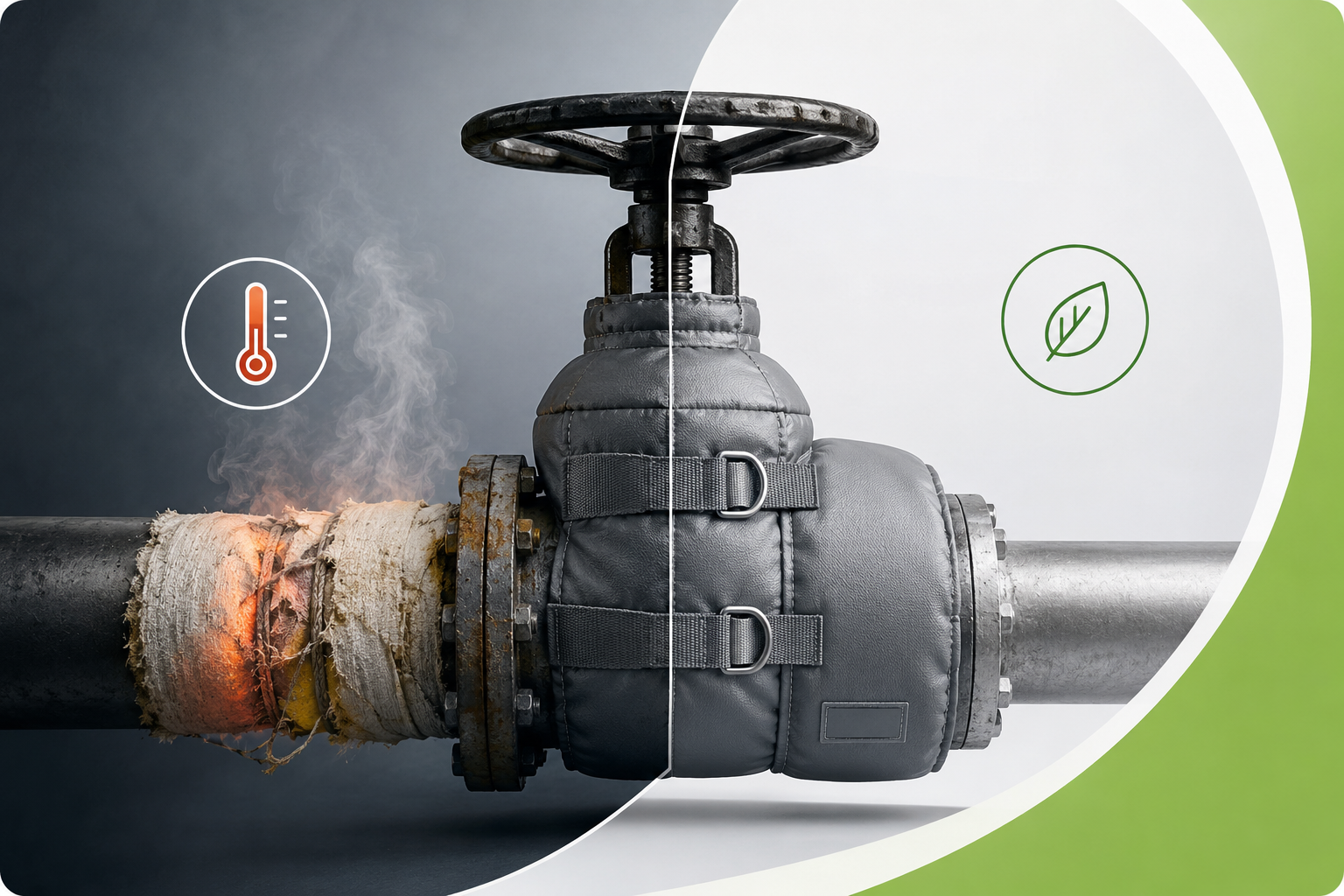

In the oil, gas, petrochemical, and power plant industries, valves (industrial valves) are considered one of the most critical components of piping systems. But a point often overlooked is significant heat loss from the surface of uninsulated valves. A single 6-inch class 150 valve has a surface area equivalent to 4 feet of 6-inch pipe—in other words, every uninsulated valve wastes energy like several meters of uninsulated pipe.
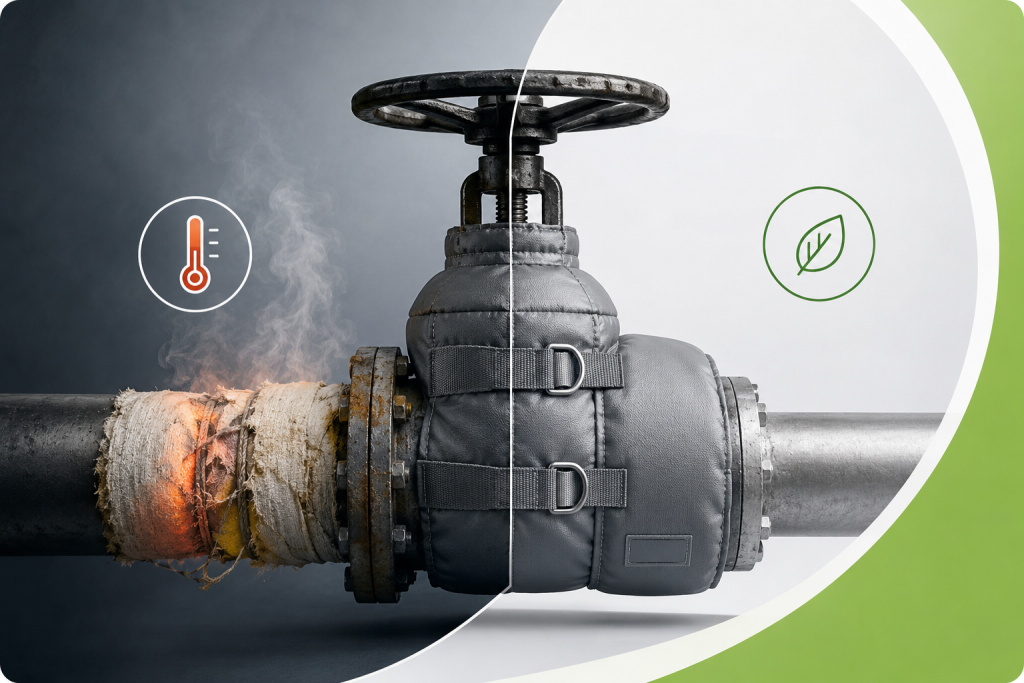
Valve insulation or jacket valve insulation is an efficient solution for reducing energy loss, increasing employee safety, and improving the overall performance of industrial systems. In this comprehensive article, you will learn about types of valve insulation, valid standards, benefits, installation methods, and its comparison with traditional insulation.
This comprehensive guide examines industrial valve insulation, an efficient solution for reducing significant heat loss in piping systems of oil, gas, petrochemical, and power plant industries, increasing employee safety, and improving overall process performance.
In this content, types of valve insulation (removable jacket and fixed traditional), relevant international standards, benefits of insulation, correct installation method, comparison of the two types in terms of cost and performance, and a guide to choosing the right insulation based on service temperature and environmental conditions are described.
What is Valve Insulation?
Valve insulation refers to a set of insulating covers that are installed on the body and components of industrial valves to prevent heat loss, surface temperature reduction, fire protection, and noise control.
Valve insulations are generally divided into two main categories:
| Type of Insulation | Features | Applications |
|---|---|---|
| Jacket valve insulation (removable) | Flexible covers with easy installation and removal | Turbines, control valves, equipment requiring periodic maintenance |
| Traditional insulation (fixed) | Prefabricated insulations made of rock wool, cellulose, or calcium silicate | Pipelines with limited access, equipment with low inspection needs |
Jacket insulations or removable insulation jackets have become a popular option in industries in recent years due to ease of installation and maintenance.
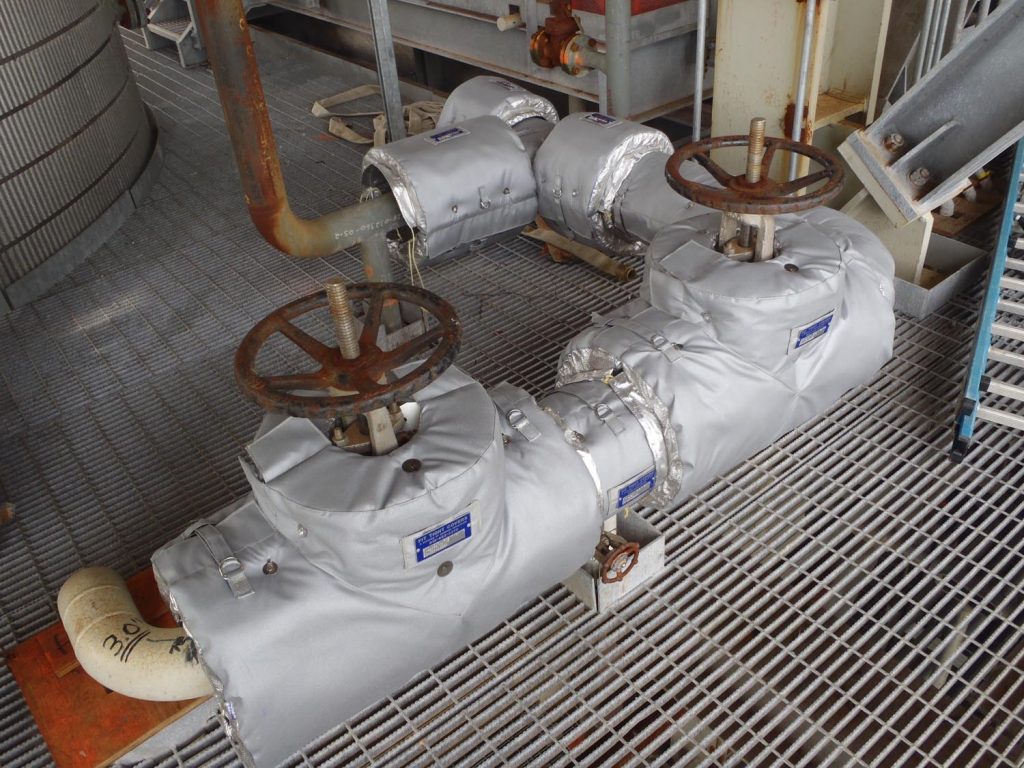
Insulated valve
Types of Valve Insulation by Material and Structure
1. Fibrous Valve Insulation (Rock Wool, Glass Wool, Ceramic Fibers)
The most common type of valve insulation made from high-density mineral fibers. These insulations have excellent thermal resistance and perform well at temperatures up to 1000°C.
Advantages: Reasonable price, sound and thermal insulation, flexibility
Disadvantages: Sensitivity to moisture, need for protective cover
2. Ceramic Fiber Valve Insulation (Ceramic Blanket)
Suitable for very high temperatures (up to 1400°C). This type of insulation is widely used in steel, glass, and industrial furnace industries.
Advantages: Very high temperature tolerance, low weight, excellent insulation
Disadvantages: Higher price, need for special protective covers
3. Elastomeric Valve Insulation (Closed-Cell Foam)
Suitable for low and medium temperatures (-20 to 120°C) and refrigeration and HVAC applications.
Advantages: Excellent moisture resistance, easy installation, high flexibility
Disadvantages: Temperature limitation, inability to withstand high heat
Valve Insulation Standards
To ensure the quality and proper performance of valve insulation, compliance with valid international standards is essential:
🔹 ASTM C1129 – Standard Practice for Estimation of Heat Savings by Adding Thermal Insulation to Bare Valves and Flanges
This standard is the most important reference for calculating energy savings from insulating valves and flanges. The mathematical methods provided in this standard allow for accurate estimation of heat loss or energy savings when adding insulation to uninsulated valves.
According to this standard, valve insulation manufacturers typically present the performance of their products in heat loss tables per valve, based on pipe size, ANSI class, type and thickness of insulation, and service temperature.
🔹 ASTM C1695 – Specification for Removable/Reusable Thermal Insulation Covers
This standard specifies the technical specifications for removable and reusable insulations.
🔹 ISO 15665 – Acoustics — Acoustic Insulation for Pipes, Valves and Flanges
International standard for acoustic insulation for pipes, valves, and flanges. The 2023 version of this standard defines four acoustic insulation classes (A, B, C, D) and provides standard measurement methods for acoustic insulation performance.
🔹 API 521 – Pressure-relieving and Depressuring Systems
This standard is used in the oil and gas industries for pressure relief systems and ensuring safety and in some cases refers to insulation of pressurized equipment.
Benefits of Valve Insulation
1. Significant Reduction in Energy Loss
Uninsulated valves act as hot spots in the system and quickly waste thermal energy. Insulating valves can reduce heat loss by up to 70% and save thousands of dollars annually in energy costs.
According to ASTM C1129, using standard calculation methods, accurate energy savings from insulating each valve can be estimated.
2. Increased Employee Safety
Hot surfaces of valves in steam and high-temperature fluid systems can reach temperatures over 400°F (204°C). Proper insulation significantly reduces surface temperature and minimizes the risk of personnel burns.
3. Improved Process Stability
Heat loss from valves can affect steam quality, process temperature stability, and overall system performance. Proper insulation helps maintain the desired fluid temperature along the path.
4. Increased Equipment Lifespan
Valve insulation protects equipment from environmental factors, corrosion under insulation (CUI), and thermal stresses.
5. Reduced Noise Pollution
According to ISO 15665, acoustic insulations can effectively reduce noise generated by fluid flow in valves.
6. Ease of Maintenance (in Removable Insulations)
Removable jacket insulations allow maintenance personnel to access the valve without destroying the insulation and reinstall the insulation after completion of work.
Comparison of Jacket Valve Insulation (Removable) with Traditional Insulation
Conclusion: Although the initial cost of jacket insulations is higher, considering maintenance costs, production downtimes, and energy savings, they are a more cost-effective option in the long run.
Guide to Choosing the Best Valve Insulation
To choose the right valve insulation, pay attention to the following key parameters:
1. Service Temperature
- Temperature below 120°C: Elastomeric insulation
- Temperature 120 to 600°C: Fibrous insulation (rock wool, glass wool)
- Temperature above 600°C: Ceramic fiber insulation
2. Valve Type
- Gate valve, globe valve, check valve: Need insulation with complex geometry
- Butterfly valve: Need open space for actuator handle
- Control valves: Need removable insulation for access to actuator
3. Environmental Conditions
- Wet environments: Need insulation with waterproof cover
- Corrosive environments: Need chemical-resistant insulation
- Fire hazard environments: Need fire-resistant insulation
4. Need for Access for Maintenance
- Frequent access: Removable jacket insulation
- Limited access: Traditional insulation
5. Acoustic Requirements
If noise reduction of valves is required, acoustic insulations according to ISO 15665 and classes A to D should be selected.
Valve Insulation Installation Guide
Step 1: Surface Preparation
- Thorough cleaning of the valve surface from any grease, dust, and rust
- Ensure the surface is dry
Step 2: Choosing the Right Insulation
- Determine insulation thickness based on service temperature and standards
- Select insulation material appropriate for operating conditions
Step 3: Installing the Insulation
For jacket insulations (removable):
- Place the cover over the valve body
- Tighten the fasteners (straps, zippers, industrial adhesives)
- Ensure complete coverage of all hot surfaces
For traditional insulations:
- Install prefabricated pieces on the valve body
- Fill joints and connections with insulating cement
- Insulate up to the bonnet, bolts, and nuts
Step 4: Completion and Covering
- Install metal or composite cover to protect the insulation
- Seal joints to prevent moisture ingress
Step 5: Final Inspection
- Ensure no compression of the insulation
- Check access to the operator and packing of the valve without needing to destroy the insulation
- The insulation should extend at least 2 inches (50 mm) over the adjacent pipe insulation on each side of the valve
Valve Insulation in Oil, Gas, and Petrochemical Industries
The oil, gas, and petrochemical industries, due to the presence of high-temperature fluids and safety hazards, are among the largest consumers of valve insulation. In these industries, valve insulation plays multiple roles:
- Maintaining fluid temperature in refining processes
- Fire protection using PFP (Passive Fire Protection) insulations
- Reducing equipment noise in accordance with ISO 15665
- Preventing corrosion under insulation (CUI) by using insulations with periodic inspection capability
According to API 521, in some pressurized equipment, proper insulation is considered a safety requirement.
Conclusion
Valve insulation is one of the most effective solutions for reducing energy loss, increasing safety, and improving performance of industrial systems. The choice between jacket insulations (removable) and traditional insulations should be made based on service temperature, valve type, environmental conditions, and access requirements.
Despite higher initial cost, jacket insulations are often a more cost-effective option in the long run due to reusability, ease of installation and maintenance, and reduced repair costs. Compliance with valid standards ASTM C1129, ASTM C1695, ISO 15665, and API 521 will ensure the quality and proper performance of valve insulation.
Read More…
For further reading on products and services related to valve insulation, please refer to the following pages:
- Jacket Valve Insulation – Specialized introduction to jacket insulation of industrial valves
- Thermal Jacket Insulation – Types of thermal jacket insulations (pillow type and cladding)
- Pillow Type Thermal Insulation – Introduction to pillow type insulations and their applications
- Passive Fire Protection (PFP) Insulation – Fire protection insulations for oil and gas industries
- Turbine Insulation – Guide to maintenance and inspection of turbine insulation
- Ceramic Refractory Blanket – Review of structure and applications of ceramic refractory blanket
External Sources and References
- ASTM C1129-17 – Standard Practice for Estimation of Heat Savings by Adding Thermal Insulation to Bare Valves and Flanges
Main reference for calculating energy savings from insulating valves and flanges - ISO 15665:2023 – Acoustics — Acoustic Insulation for Pipes, Valves and Flanges
International standard for acoustic insulation of pipes, valves, and flanges with four performance classes A to D - U.S. Department of Energy – Steam System Best Practices
Practical guide to improving steam system efficiency, including recommendations for insulating valves and fittings
Klevers Ariana Company, with over two decades of brilliant experience, is a leader in supplying and producing the most specialized refractory materials, thermal insulations, and industrial sealing systems in Iran. Klevers Ariana products include a wide range of industrial two-component adhesives, heat-resistant adhesives, flange sealing pastes, and anti-wear coatings, all manufactured and tested according to international API, ASTM, and ISO standards. The sales engineering and technical support team of Klevers Ariana is ready to provide specialized consultation for choosing the best insulation solution tailored to your operational conditions. From insulating valves in steam lines to insulation projects for turbines and high-temperature equipment, we are with you.
📞 Contact us for free consultation and to receive the technical catalog of products:
Phone: 02191305505
Website: klevers-aryana.com
Email: info@klevers-aryana.com